
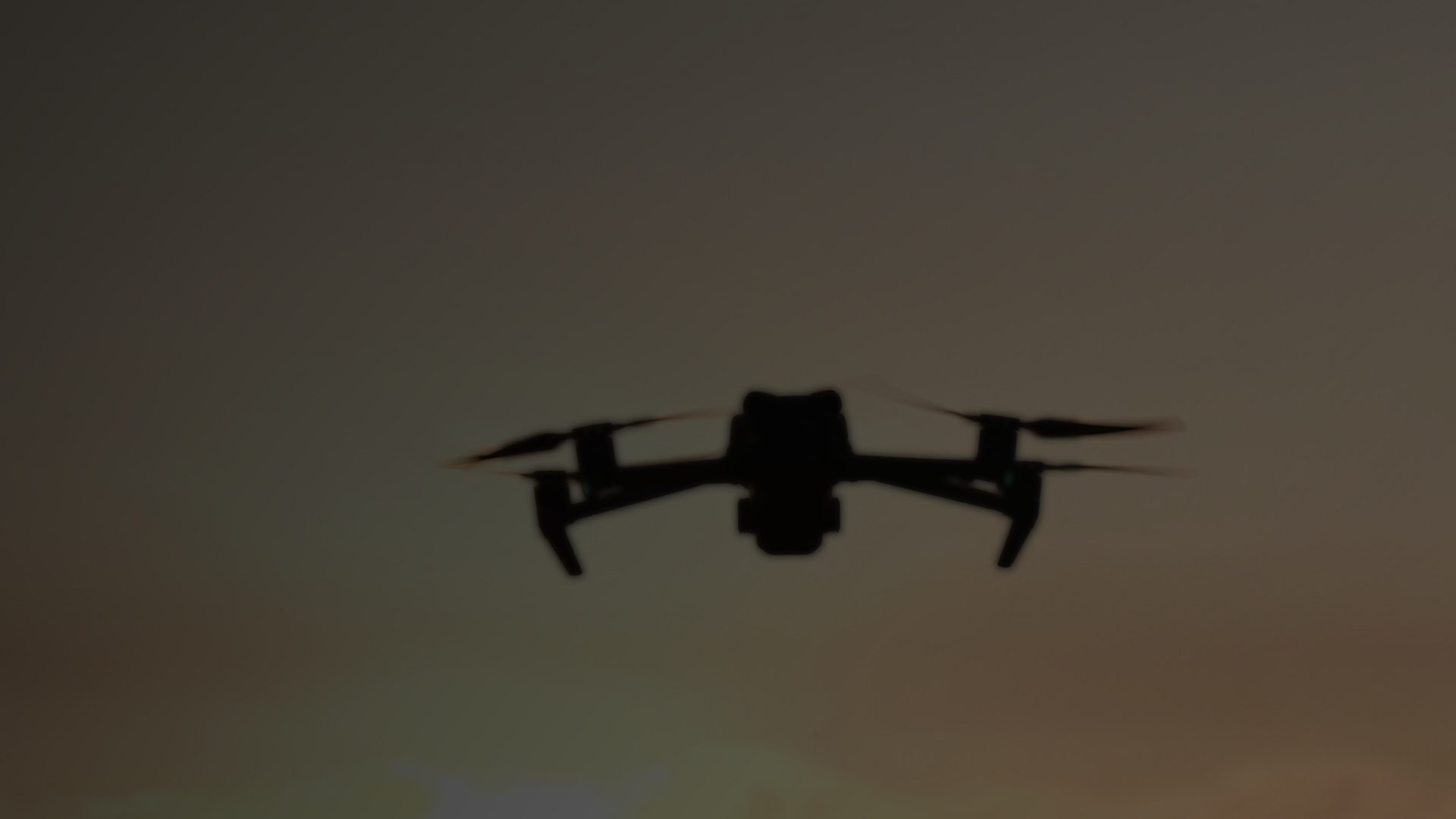
Passive detection and a compact, operator-carried defeat capability for small UAS.
SGS Defense is developing a low-cost, low-collateral last line of defense for military units and law enforcement agencies. The system is designed to detect approaching small drones—including aircraft that emit no radio signal—without producing RF emissions, and to provide a compact defeat capability that works with equipment units already carry.
The approach
Detects drones that emit no radio signal
Passive detection is designed to find and cue approaching small UAS, including autonomous and pre-programmed aircraft that radio-frequency detectors can miss.
No RF emissions, and no jamming
The detection layer is designed to operate without producing radio-frequency emissions. It is intended to preserve a military unit’s electromagnetic signature and to avoid interfering with public-safety radios, navigation signals, or nearby communications.
Compact, low-cost, and low-collateral
A compact, operator-carried defeat capability is designed to work with equipment units already carry. The intent is an affordable close-in layer better suited to crowded or sensitive sites than high-cost interceptors or long-range fire, and to complement—not replace—wider-area defenses.
Who we serve
Military
For base defense, small units, special operations, and Marine and Army maneuver forces that need an organic, RF-silent close-in layer.
Military applicationsLaw Enforcement
For event security, critical infrastructure, and correctional facilities that need passive detection first, with kinetic defeat reserved for authorized mitigation teams.
Law enforcement and correctionsOur system is intended as a close-in layer alongside wider-area defenses—not as a replacement for them.
Request a briefing